A stochastic model for understanding how climate affects snowpacks
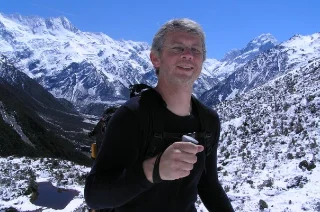
- Speaker: Ross Woods (University of Bristol)
- Date and Time: Tuesday 27 October 2026, 13:15
- Location: 6 East 2.1, University of Bath
- Series: Applied and Interdisciplinary Mathematics Seminar
Abstract
Melting snow is a key source of water for more than 2 billion people. Changes in climate are already causing changes in the amount and timing of snowmelt, and substantial further changes are expected in future. Communicating why these changes are happening, and why they aren’t the same everywhere, will help water managers to navigate these changes. At present, we have scientific capability to calculate the expected changes in snow, but not to explain conceptually why the effects vary from place to place. The difficulty arises because snowpack dynamics are driven by nonlinear (but elementary) interactions between weather elements such as temperature and precipitation, at multiple timescales. In this talk I will (i) show some typical snow and climate data (ii) present a deterministic snowpack model and explain its strengths and weaknesses (iii) propose a non-stationary stochastic model for the snowpack, and show some preliminary results.
Research visit
Ross Woods will also be visiting the Department of Mathematical Sciences on Wednesday 28 October 2026, and would be pleased to meet with interested researchers who would like to talk about interesting problems. Please get in touch with the contact below to arrange a meeting.
Organiser and contact
Phil Trinh (Mathematical Sciences)
Contact: Phil Trinh